
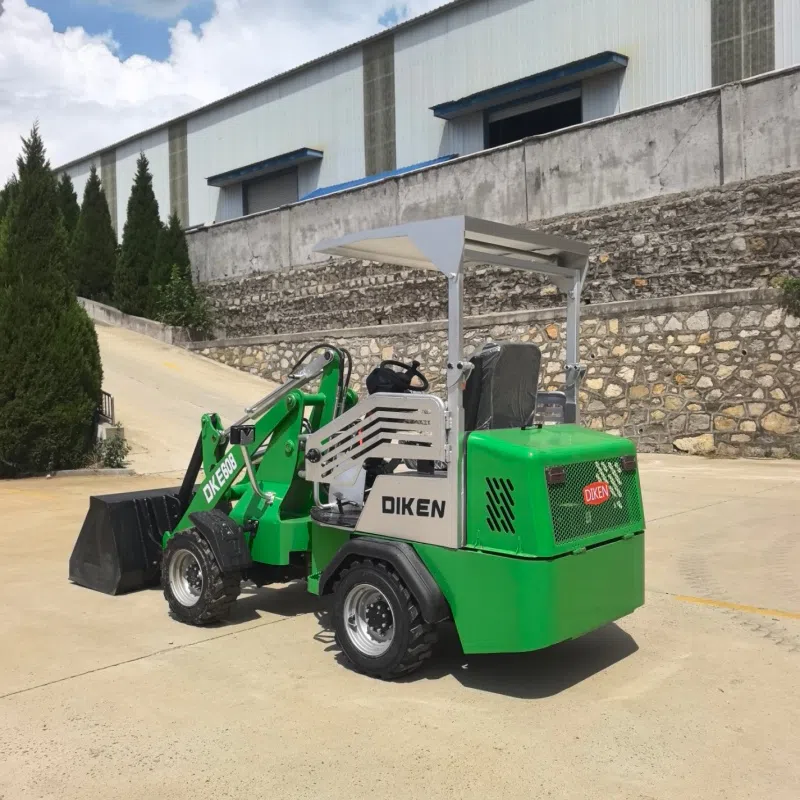
Product Overview
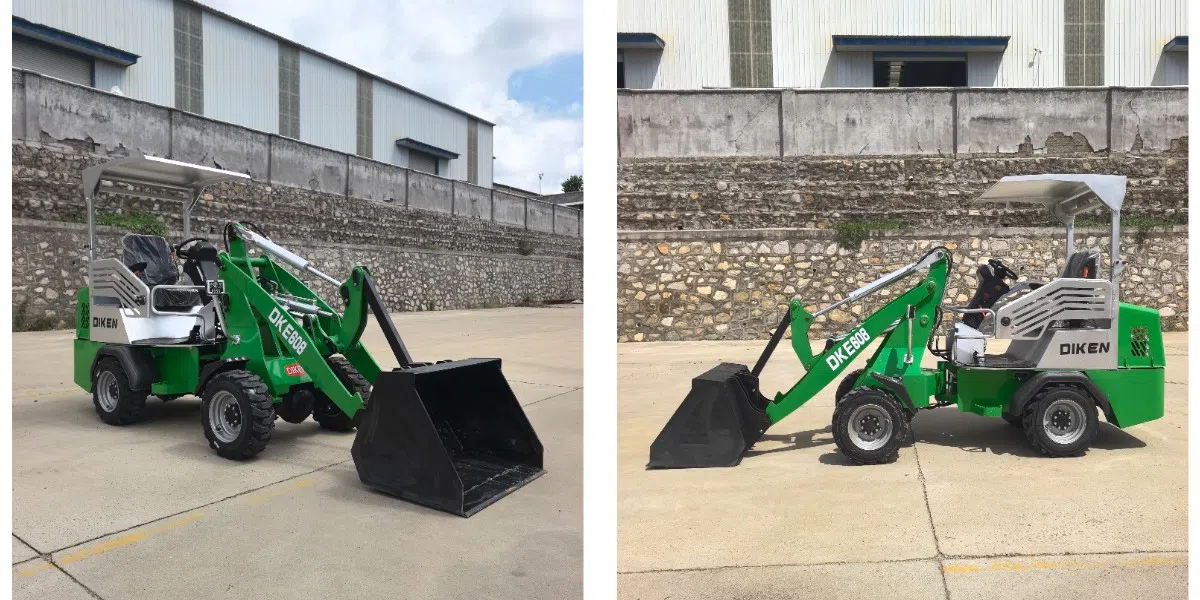
Looking for a compact loader that supports everyday material handling without relying on a conventional diesel engine? The 0.8 Ton Compact Electric Wheel Loader provides a battery-powered solution for businesses that need a maneuverable machine for light loading tasks, material transfer, and general site maintenance.
Designed for agricultural operations, garden and landscape maintenance, storage yards, logistics facilities, and small-scale construction projects, this 0.8 ton mini electric loader helps move materials across a variety of work areas. Its compact format is particularly useful where larger wheel loaders may be difficult to operate, subject to the site's access, ground conditions, and required working clearance.
The all-electric drive system produces no direct exhaust emissions at the point of use and can help create a quieter working environment than comparable combustion-engine equipment. With no conventional diesel engine to maintain, the machine may also require less engine-related routine servicing. Actual operating-cost benefits depend on electricity rates, usage intensity, battery life, and maintenance practices.
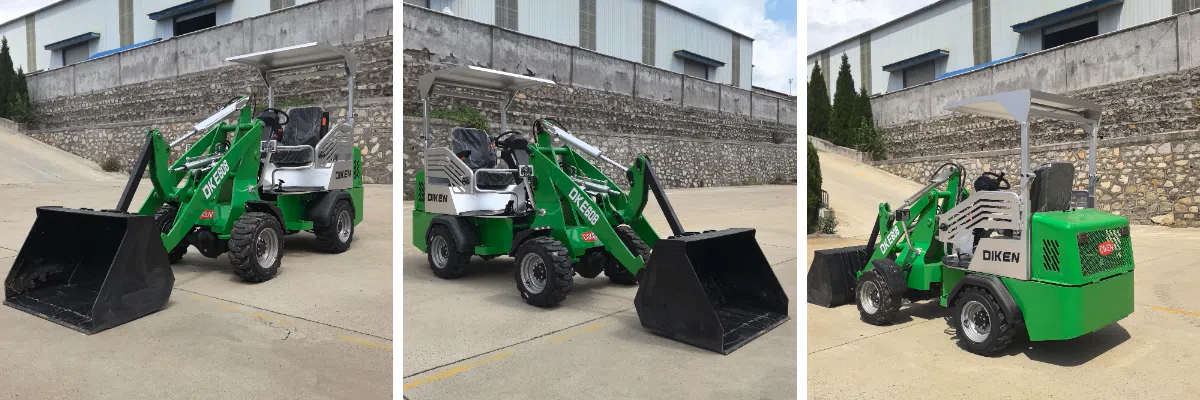
As a versatile small electric wheel loader, the 0.8-ton model can support a range of light-duty tasks when configured with compatible attachments. Battery options and equipment configurations should be selected according to daily operating hours, material type, and site requirements.
Whether you are upgrading your material handling equipment or sourcing compact electric machinery for your business, this 0.8 ton electric loader is worth considering for applications where maneuverability, reduced local emissions, and electric operation are priorities. Contact our team for model specifications, available configurations, attachment compatibility, and a customized quotation.
Technical Parameters
| Parameter | |
| Model | DKE608 |
| Keywords | Electric Wheel Loader |
| Rated Load | 800kg |
| Rated Power | 9kw |
| Travel Type | Wheel |
| Machine Type | Compact Loader, Front-end Loader, Wheel Loader |
| Power Type | Pure Electric |
| Drive Motor Brand | DIKEN |
| Hydraulic Pump Brand | DIKEN |
| Hydraulic Cylinder Brand | DIKEN |
| Hydraulic Control Valve Brand | DIKEN |
| Warranty Period | Battery 3 years, others 1 year |
| Core Components | Drive Motor, Power Battery |
| Brand | DIKEN |
| Bucket Capacity | 0.3m³ |
| Operating Weight | 1800kg |
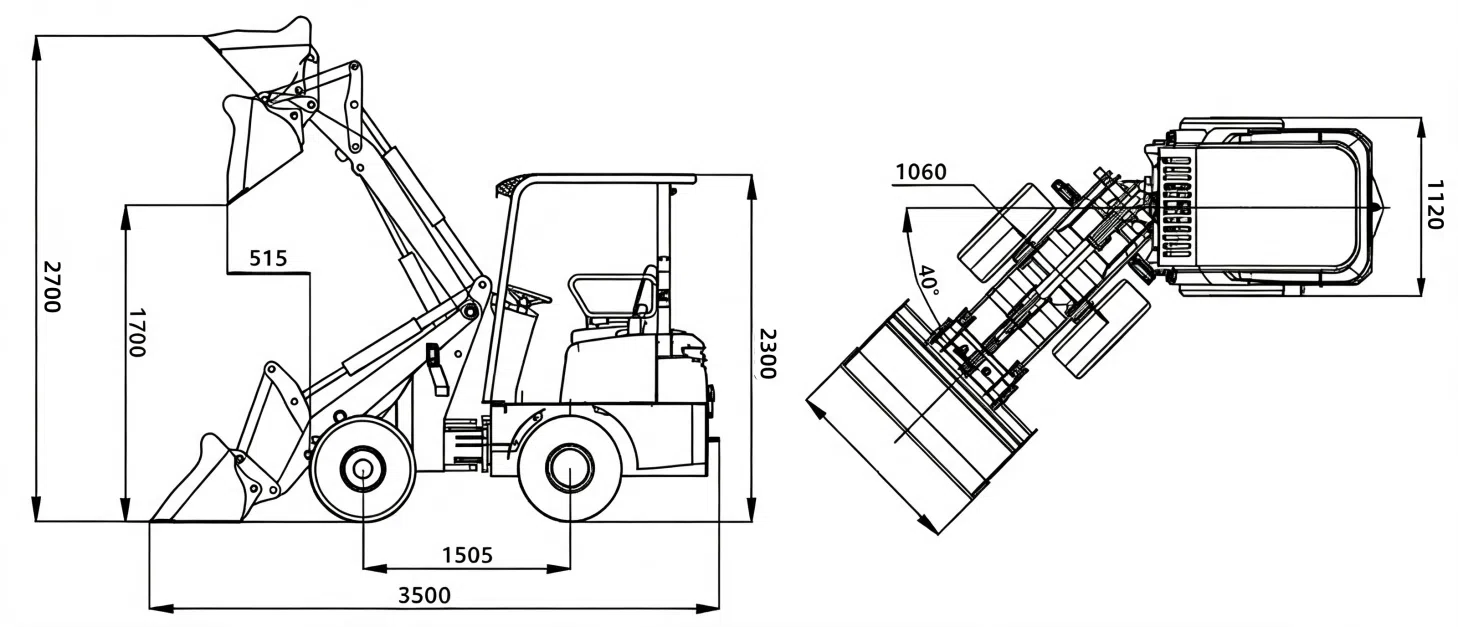
| Overall Dimensions (L×W×H) | 3500*1120*2300mm |
| Battery Type | Lithium-ion battery |
| Battery Specification | 60V150AH |
| Operating Time per Full Charge | 4–7hours |
| Maximum Lifting Height | 2700mm |
| Maximum Dumping Height | 1700mm |
| Full Charging Time | 3-5hours |
| Maximum Dumping Angle | 35° |
Application Cases
Different worksites have different material handling requirements. The 0.8 Ton Electric Wheel Loader is intended for businesses that need a compact machine for light loading and short-distance transportation without relying on a conventional diesel engine. Below are several practical scenarios where this mini electric loader may be worth considering.
1. When Your Worksite Has Limited Space
Narrow access routes, small yards, and confined work zones can make larger loading equipment impractical. A compact electric wheel loader may provide a more suitable option for moving materials in restricted areas, provided its overall dimensions, turning radius, and operating clearance meet the site's requirements.
Typical tasks: Moving soil, loading landscaping materials, and transporting suitable supplies around compact work areas.
2. When Local Exhaust Emissions Are a Concern
Facilities that prioritize reducing exhaust emissions at the point of use may benefit from considering battery-powered equipment. The 0.8 ton battery powered wheel loader produces no direct exhaust emissions during normal electric operation and may operate more quietly than comparable combustion-engine machinery.
Typical environments: Appropriate agricultural buildings, designated indoor material handling areas, and semi-enclosed facilities where ventilation, charging safety, and operating rules have been properly addressed.
3. When Routine Material Transport Takes Up Working Time
Repeatedly moving small quantities of materials can consume labor and time. A 0.8 ton mini electric wheel loader can assist with selected loading and transfer tasks, helping teams organize material movement around farms, gardens, storage areas, and maintenance sites.
Typical materials: Soil, sand, mulch, and other materials that remain within the machine's rated capacity and approved operating limits.
4. When One Machine Needs to Support Different Tasks
Businesses with varied light-duty work may benefit from a loader configured for more than one application. Depending on the model, approved buckets, pallet forks, or other compatible attachments may expand its usefulness for material handling, landscaping, and agricultural operations.
Selection tip: Confirm attachment compatibility, load limits, hydraulic requirements, and the machine's load capacity with the supplier before ordering.
5. When You Want to Review Electric Operating Costs
For businesses comparing electric and diesel equipment, the 0.8 ton electric wheel loader offers a different approach to routine operation and maintenance. It avoids conventional engine servicing tasks such as engine oil changes, while battery charging, battery condition, hydraulic maintenance, tires, and electrical components still require attention.
Selection tip: Compare expected daily working hours, local electricity and fuel prices, charging access, and battery replacement costs to estimate the total cost of ownership for your operation.
Choose an Electric Loader That Fits Your Daily Work
The 0.8 Ton Electric Wheel Loader is a potential solution for light material handling where compact dimensions and battery-powered operation are priorities. Before making a purchase, consider your material type, site layout, surface conditions, daily workload, and charging arrangements. Contact us for detailed specifications and configuration recommendations based on your application.
Core Product Advantages
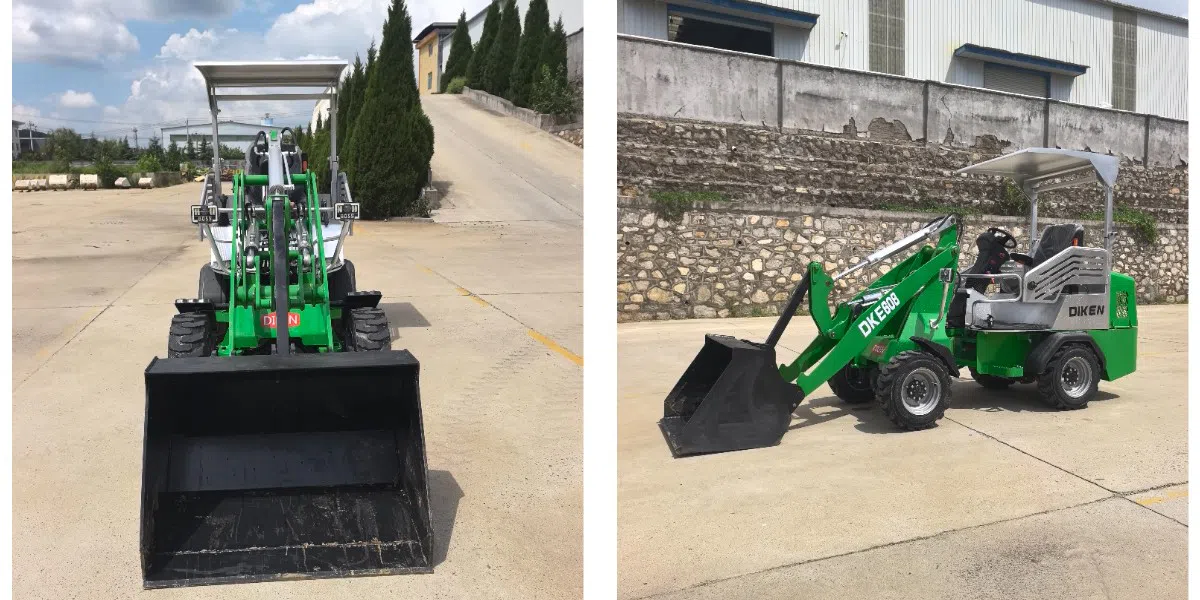
Why Invest in a 0.8 Ton Mini Electric Wheel Loader?
1. Choose Electric Power for Cleaner Worksites
Improve your material handling setup with a 0.8 Ton Mini Electric Wheel Loader designed for battery-powered operation. With no direct exhaust emissions at the point of use, it can be a practical choice for applications where local air quality matters. Its electric drive may also help reduce operating noise compared with similar combustion-engine machines, depending on working conditions.
2. Fit More Work into Smaller Spaces
Not every job requires a large wheel loader. This 0.8 ton mini electric loader is designed for light-duty tasks in smaller work areas, making it worth considering for farm operations, landscaping, property maintenance, and storage facilities. Check the machine's overall dimensions, turning requirements, and ground clearance against your site before purchase.
3. Match Machine Capacity to Your Workload
The machine's 0.8-ton rated load capacity makes it suitable for selected light material handling jobs rather than heavy-duty bulk loading. When choosing a compact electric wheel loader, consider the weight and density of the material, bucket capacity, travel distance, surface conditions, and required loading height. Correct machine selection helps align equipment capability with actual site demands.
4. Expand Practical Use with Suitable Attachments
One compact machine may support several types of work when equipped with approved attachments. Depending on the model and configuration, compatible tools can support bucket loading, pallet handling, landscaping, and routine agricultural tasks. Our team can help you review available attachment options and confirm their compatibility with your intended applications.
5. Reduce Dependence on Conventional Engine Servicing
Compared with a diesel-powered loader, a battery powered wheel loader avoids routine combustion-engine maintenance tasks such as engine oil and oil-filter changes. This can simplify part of the maintenance schedule, although battery condition, charging practices, hydraulic servicing, tire wear, and electrical-system inspections remain important. Total ownership costs depend on usage, electricity prices, battery replacement needs, and local service costs.
6. Select a Configuration That Fits Your Operation
Battery capacity, charging arrangements, attachments, and machine specifications can affect how effectively an electric loader performs in daily use. Before purchasing a 0.8 ton electric wheel loader, evaluate your expected working hours, charging access, material handling requirements, and site conditions. Contact us for available configurations, technical specifications, and a quotation tailored to your application.
FAQ
Q1: What applications is the 0.8 Ton Electric Wheel Loader suitable for?
The 0.8 Ton Electric Wheel Loader is designed for light-duty material handling in applications such as agriculture, landscaping, garden maintenance, storage areas, and small construction projects. It can assist with moving suitable materials over short distances, provided the load weight and working conditions remain within the manufacturer's specifications.
Q2: Can the 0.8 Ton Mini Electric Wheel Loader be used indoors?
Yes, the 0.8 Ton Mini Electric Wheel Loader may be suitable for indoor or semi-enclosed applications because its battery-powered operation produces no direct exhaust emissions at the point of use and can help reduce operating noise. However, indoor use requires adequate working space, suitable flooring, safe charging arrangements, and compliance with site ventilation and safety requirements.
Q3: What attachments are available for the 0.8 Ton Electric Wheel Loader?
Depending on the machine configuration, compatible attachments may include loading buckets, pallet forks, sweepers, and other material handling tools. Attachment availability depends on the model, mounting interface, hydraulic requirements, and rated load limits. Please confirm compatibility and whether a quick-attach system is included before placing an order.
Q4: Is an electric wheel loader easier to maintain than a diesel wheel loader?
A battery-powered wheel loader eliminates conventional combustion-engine maintenance tasks, such as engine oil and oil-filter changes. This may simplify routine servicing compared with a diesel wheel loader. However, the battery, charging system, electrical components, hydraulic system, tires, and safety devices still require regular inspection and maintenance. Actual maintenance costs depend on operating conditions and service requirements.
Q5: Can I customize the color or battery configuration of the 0.8 Ton Electric Wheel Loader?
Customization options may be available, depending on the production configuration and order requirements. These may include machine color, battery specifications, and selected optional equipment. Battery capacity should be matched to expected working hours, workload, charging availability, and operating conditions. Contact our team to confirm available OEM/ODM options and minimum order requirements.
Q6: How long can the mini electric wheel loader operate on a single charge?
Operating time depends on battery capacity, material weight, working intensity, travel distance, ambient temperature, and operator habits. Frequent loading, lifting, and travel under heavy loads can increase energy consumption. For a more accurate estimate, provide your expected daily working hours and application details so the appropriate battery configuration can be evaluated.
Q7: How long does it take to charge the electric wheel loader?
Charging time depends on battery specifications, charger output, remaining battery level, and charging conditions. Please refer to the manufacturer's technical data for the recommended charger and charging duration. Confirm the required power supply and charging arrangements before using the machine at your facility.
Q8: What should I consider before purchasing a 0.8 Ton Electric Wheel Loader?
Before purchasing, consider the rated load capacity, overall machine dimensions, working area, material type, ground conditions, battery capacity, charging access, and attachment requirements. For indoor applications, also assess access clearance, floor suitability, ventilation, and charging safety. Our team can help you review the available specifications and select a configuration suited to your project.
Q9: Do you provide technical support and after-sales service?
Technical support and after-sales service can be discussed according to the machine configuration, sales agreement, and destination market. Before ordering, please confirm the available operating manuals, maintenance guidance, spare parts supply, warranty terms, and technical assistance arrangements with our sales team.


