Product Overview
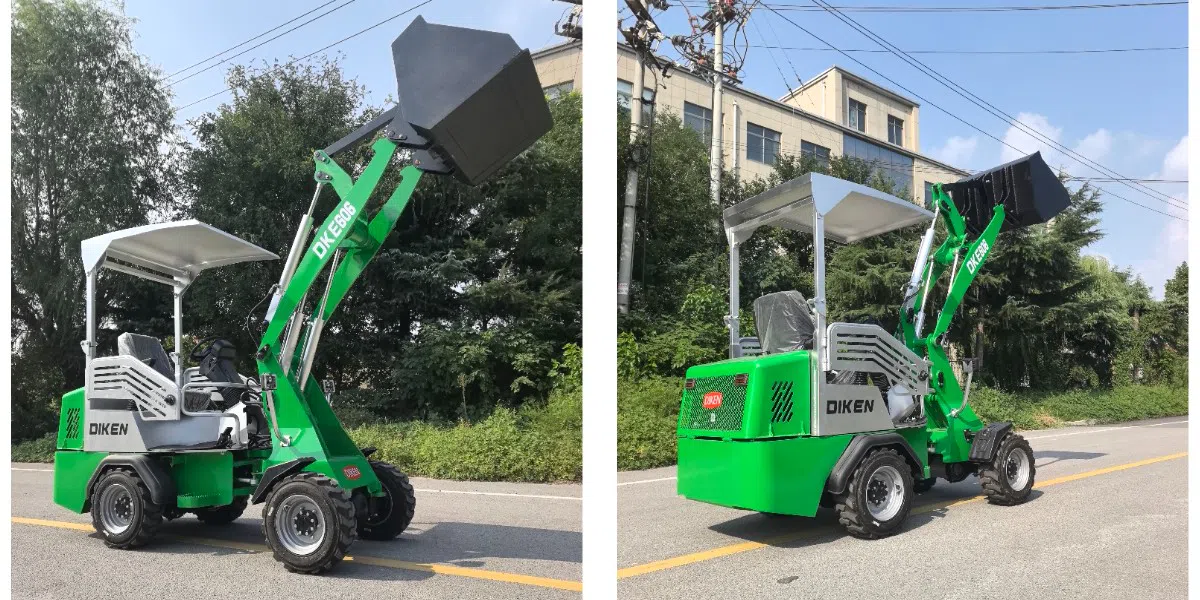
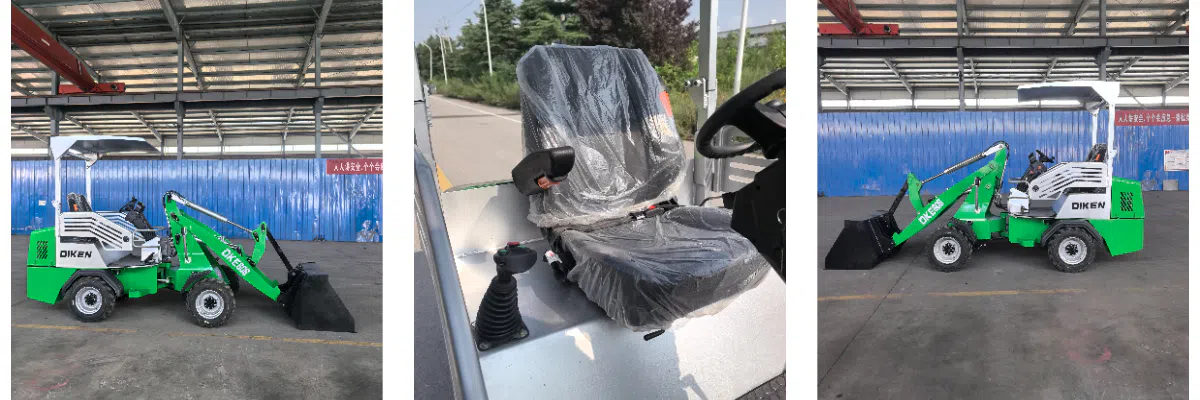
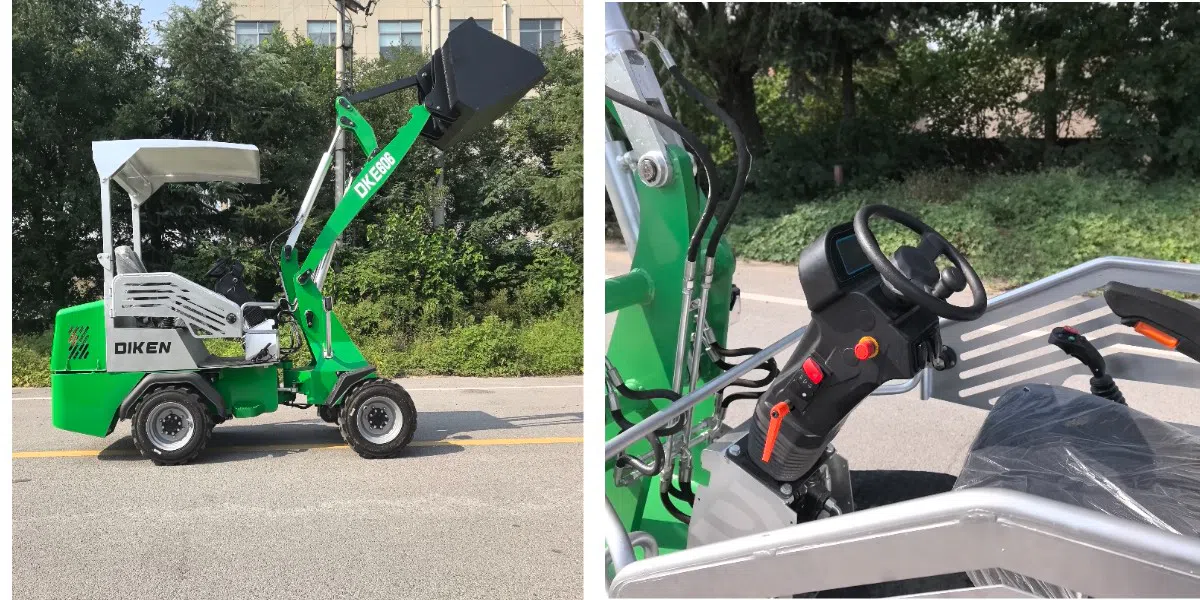
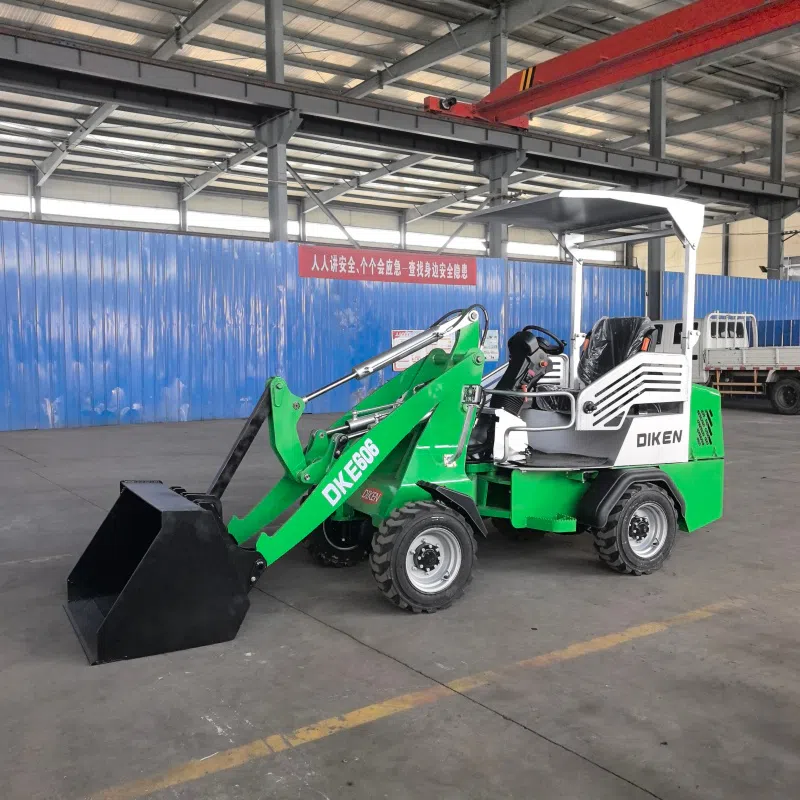
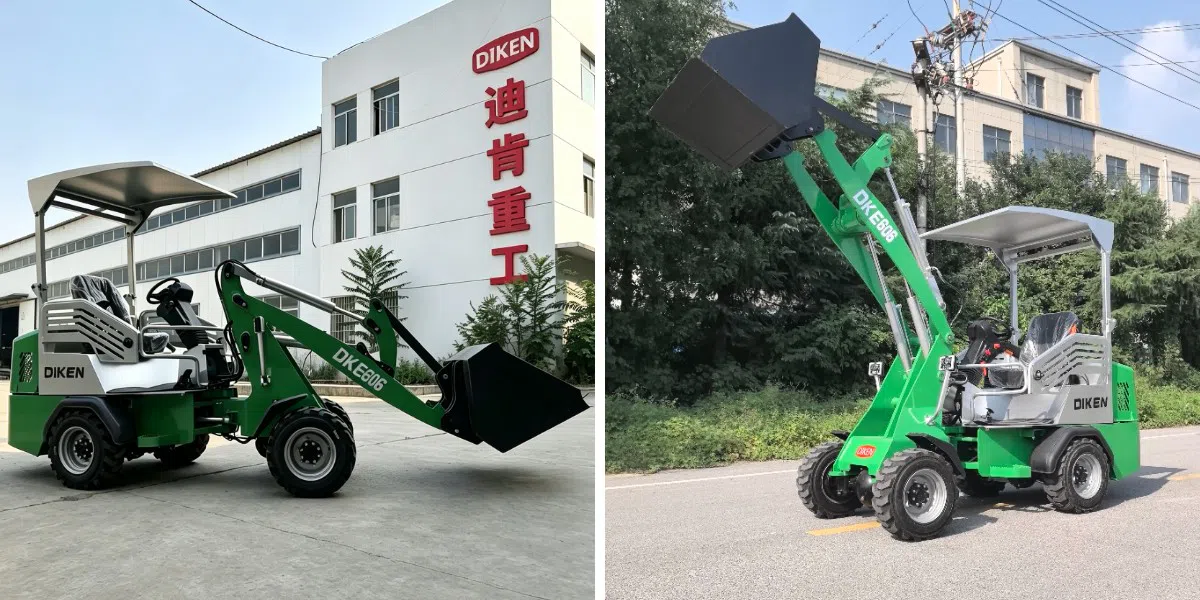
Need a compact loader for everyday material handling in a warehouse, greenhouse, farm, or landscaping project? The 0.6 Ton Electric Wheel Loader is designed for businesses that value maneuverability, quieter operation, and a convenient alternative to conventional fuel-powered equipment.
Unlike diesel-powered loaders, this battery powered wheel loader produces no exhaust emissions at the point of use. Its electric operating system can help create a more comfortable working environment in suitable applications where exhaust and noise need to be managed. Actual suitability for indoor use depends on ventilation, site rules, surface conditions, and the specific working environment.
With its compact structure and articulated steering, the 0.6 ton electric mini loader is suited to light-duty material handling where working space is limited. It can support selected tasks such as moving compatible materials, handling supplies, and maintaining work areas across agricultural facilities, landscaping operations, storage spaces, and small construction projects.
Battery-powered operation eliminates the need for diesel refueling and may reduce routine powertrain maintenance compared with similar combustion-engine equipment. Operating costs and productivity depend on battery capacity, charging arrangements, workload, and daily usage patterns.
Technical Parameters
| Parameter | |
| Model | DKE606 |
| Keywords | Electric Wheel Loader |
| Rated Load | 600kg |
| Rated Power | 9kw |
| Travel Type | Wheel |
| Machine Type | Compact Loader, Front-end Loader, Wheel Loader |
| Power Type | Pure Electric |
| Drive Motor Brand | DIKEN |
| Hydraulic Pump Brand | DIKEN |
| Hydraulic Cylinder Brand | DIKEN |
| Hydraulic Control Valve Brand | DIKEN |
| Warranty Period | Battery 3 years, others 1 year |
| Core Components | Drive Motor, Power Battery |
| Brand | DIKEN |
| Bucket Capacity | 0.3m³ |
| Operating Weight | 1800kg |
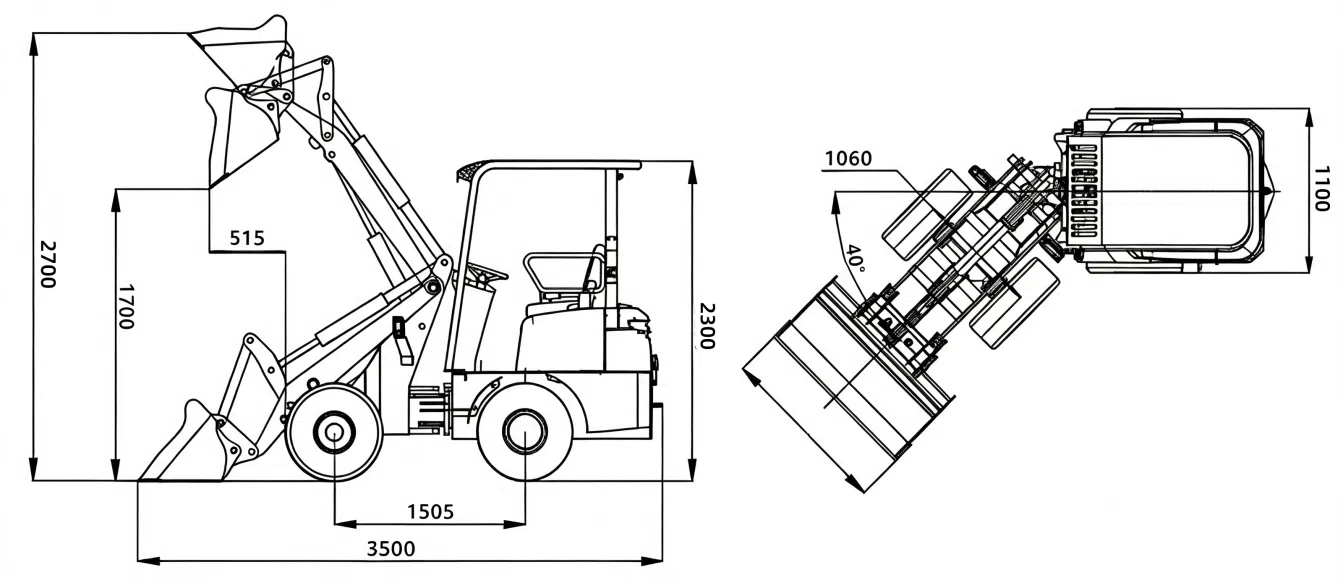
| Overall Dimensions (L×W×H) | 3500*1100*2300mm |
| Battery Type | Lithium-ion battery |
| Battery Specification | 60V150AH |
| Operating Time per Full Charge | 4–7hours |
| Maximum Lifting Height | 2700mm |
| Maximum Dumping Height | 1700mm |
| Full Charging Time | 3-5hours |
| Maximum Dumping Angle | 35° |
Core Product Advantages
Why Choose Our 0.6 Ton Electric Wheel Loader?
1. Work Efficiently Where Space Is Limited
Large machinery is not always practical in small work areas. The 0.6 Ton Electric Wheel Loader combines a compact footprint with articulated steering to support maneuvering in restricted spaces, including smaller yards, landscaping projects, and suitable agricultural facilities.
2. Choose Electric Power for Noise-Sensitive Workplaces
Battery-powered operation helps reduce operating noise and avoids direct exhaust emissions at the point of use. This makes the compact electric wheel loader worth considering for selected warehouses, greenhouses, and semi-enclosed workspaces, subject to ventilation and site safety requirements.
3. Handle Everyday Materials with a Compact Loader
From loose materials to compatible loads handled with approved attachments, this 0.6 ton electric loader supports routine loading and short-distance transport tasks. Confirm the material type, attachment compatibility, and rated load limits before selecting the machine for a specific job.
4. Reduce Dependence on Conventional Fuel
Rechargeable electric power removes the need for diesel refueling and may help reduce energy expenses where electricity is cost-effective. Actual savings depend on local electricity prices, charging efficiency, operating hours, and workload.
5. Simplify Routine Service Planning
The absence of a conventional combustion engine removes certain engine-related maintenance tasks. Regular battery checks, tire inspections, hydraulic maintenance, and electrical system checks are still required to support reliable operation and long-term equipment care.
6. Adapt the Machine to Different Work Requirements
Suitable attachment options may allow the 0.6 ton battery powered wheel loader to handle different material types and tasks. Ask about available buckets, forks, or other compatible tools to identify a configuration that matches your working conditions.
7. A Practical Option for Small-Scale Operations
For farms, landscaping businesses, storage facilities, and light construction projects, a compact electric wheel loader can provide a useful combination of maneuverability and convenient electric operation. Assess the required load capacity, working hours, charging access, and site conditions before purchasing.
Application Cases
Not every material handling job requires a large diesel loader. For businesses working in confined spaces or seeking battery-powered equipment for light-duty tasks, the 0.6 Ton Electric Wheel Loader offers a compact alternative designed around maneuverability and convenient electric operation.
Case 1: Handling Materials in Restricted Workspaces
Typical challenge: Narrow aisles, limited turning space, and obstacles can make larger machines difficult to operate.
Equipment application: The compact chassis and articulated steering of the 0.6 ton electric wheel loader support maneuvering in suitable confined areas, such as smaller yards, storage zones, and landscaping sites.
Operational value: A more space-conscious option for routine loading and short-distance material transport.
Case 2: Working in Areas Where Exhaust Emissions Need to Be Controlled
Typical challenge: Indoor or semi-enclosed work areas may require equipment that does not produce exhaust emissions at the point of use.
Equipment application: The battery powered electric wheel loader operates without an onboard combustion engine, making it suitable for consideration in appropriately ventilated indoor environments.
Operational value: Supports material handling without direct exhaust emissions from the machine during operation. Site ventilation, charging arrangements, and safety requirements must still be assessed.
Case 3: Moving Soil and Landscaping Materials
Typical challenge: Landscaping projects require frequent movement of soil, mulch, compost, and other compatible materials across relatively small working areas.
Equipment application: With a suitable front bucket, the 0.6 ton electric mini wheel loader can assist with loading and transporting materials within its rated capacity.
Operational value: Helps consolidate routine light-duty material handling tasks with compact equipment.
Case 4: Supporting Daily Agricultural Work
Typical challenge: Small farms and agricultural facilities need equipment for moving supplies and materials without occupying excessive working space.
Equipment application: The electric wheel loader can handle selected agricultural materials around suitable barns, storage areas, and farmyards when surface conditions and attachment requirements are appropriate.
Operational value: Provides a rechargeable equipment option for recurring light material handling tasks.
Case 5: Reducing Dependence on Diesel Refueling
Typical challenge: Frequent refueling and combustion-engine maintenance can add complexity to equipment management.
Equipment application: Battery-powered operation eliminates the need for diesel refueling and removes maintenance tasks specific to a conventional diesel engine.
Operational value: May simplify routine equipment management. Actual running costs depend on electricity prices, charging efficiency, workload, battery life, and required maintenance.
Case 6: Matching Attachments to Different Materials
Typical challenge: Different jobs require different tools for handling loose materials, palletized goods, or other compatible loads.
Equipment application: Depending on the model, approved attachments may expand the functions of the 0.6 ton electric wheel loader beyond standard bucket work.
Operational value: Greater application flexibility when the attachment interface, load limits, and machine configuration are confirmed in advance.
Choose a Compact Electric Wheel Loader with Confidence
Before purchasing a 0.6 Ton Electric Wheel Loader, consider your material type, maximum load, aisle width, ground conditions, expected operating hours, and charging access. These factors help determine whether a compact battery powered wheel loader is the right fit for your operation.
Product Display