
Product Overview
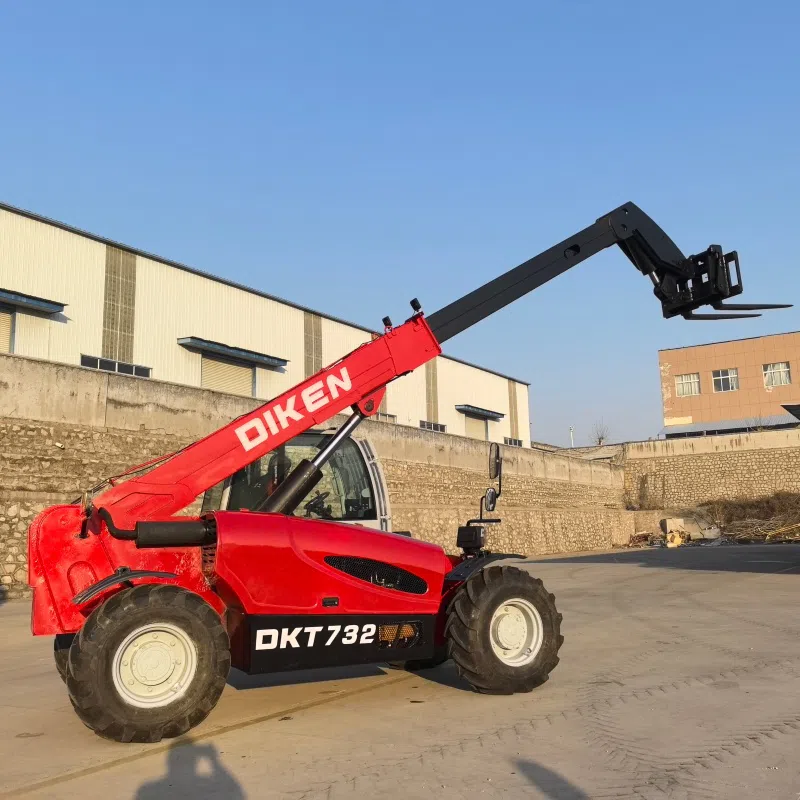
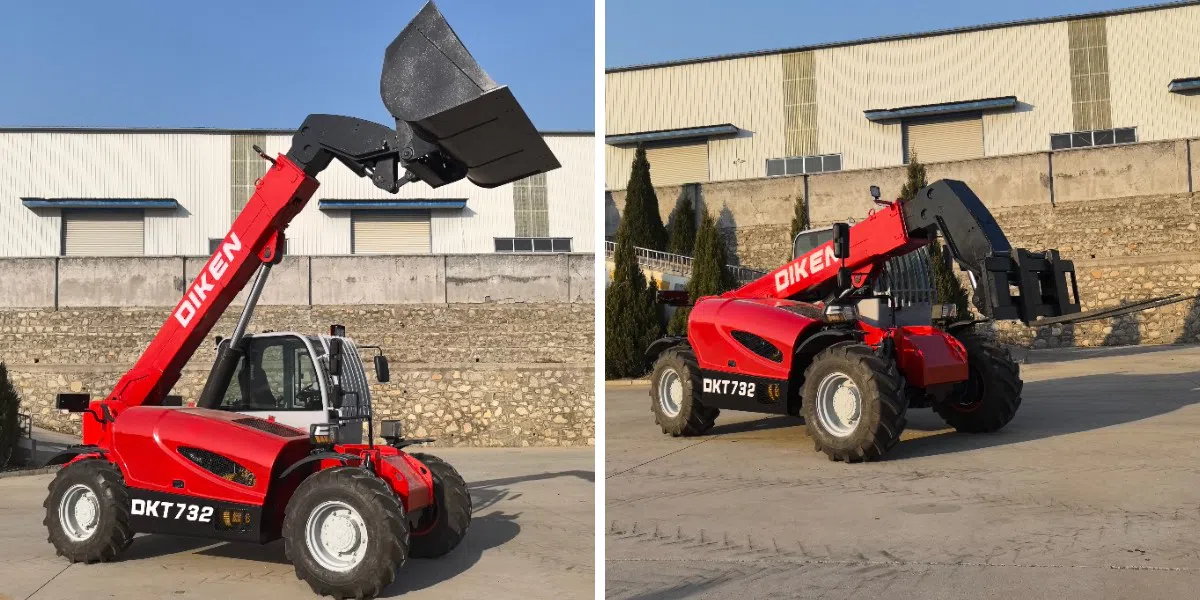
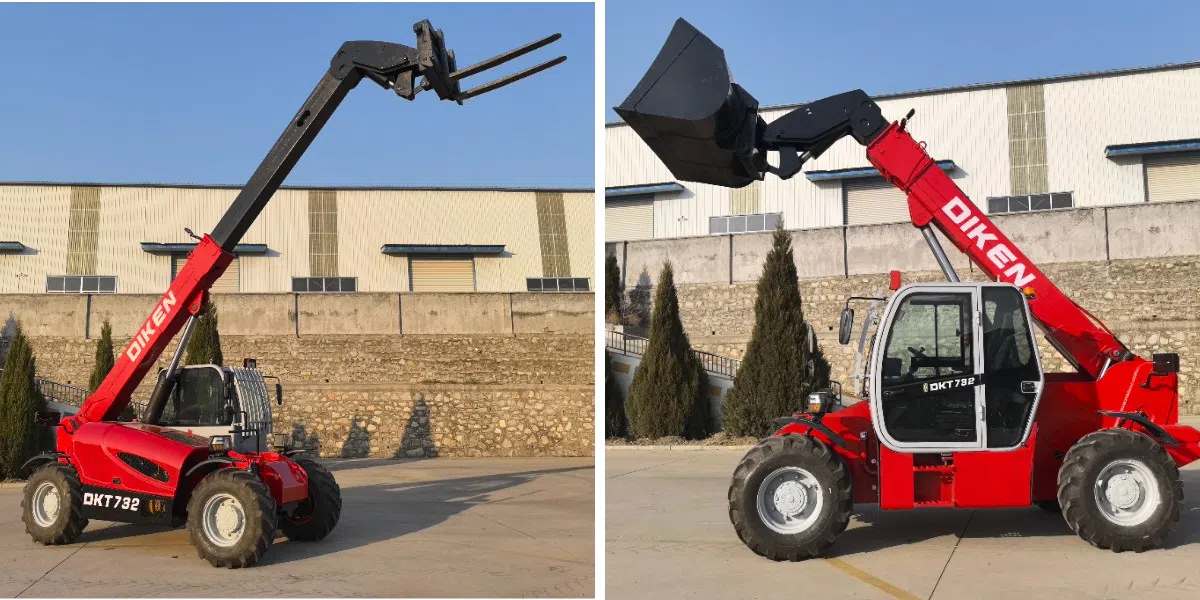
Reach higher. Handle more. Work with greater flexibility. The 3.2 Ton 7 m Telehandler is engineered for businesses that need a versatile machine for lifting and transferring materials across varied job-site environments. Its 3.2-ton rated lifting capacity and 7-meter maximum lifting height make it suitable for a range of material-handling tasks in construction, agriculture, equipment yards, and outdoor industrial facilities.
Unlike a conventional forklift with a fixed mast, this 3.2 Ton Telescopic Handler uses a telescopic boom to provide adjustable reach for placing loads at height or beyond the machine's immediate footprint. This design can help with stacking supplies, moving agricultural materials, and delivering construction products to elevated work areas. The correct attachment and load configuration must be selected for each task to maintain safe operating limits.
Space-efficient machine dimensions help support maneuverability around storage areas and active work sites. For outdoor applications, the chassis and tire configuration are designed to accommodate suitable unpaved working surfaces, including compacted soil and gravel. Site conditions should be assessed before operation, particularly on soft ground, slopes, or uneven terrain.
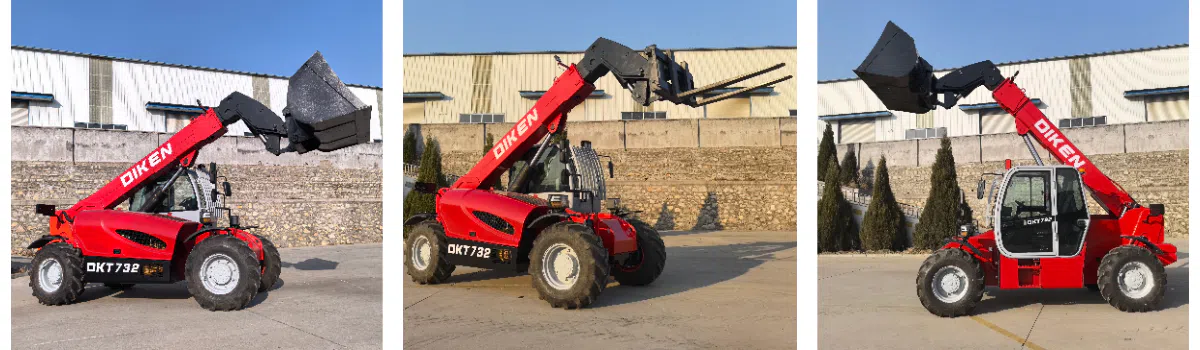
To meet different operating requirements, compatible attachments and available configuration options can be discussed during the purchasing process. We also welcome inquiries about OEM/ODM services where available. If you are sourcing a 3.2 Ton 7 m Telehandler for construction, farming, or general outdoor material handling, contact our team to confirm specifications, attachment compatibility, delivery arrangements, and pricing.
Product Video
Technical Parameters
| ITEM | UNIT | DKT732 |
| Working Performance | ||
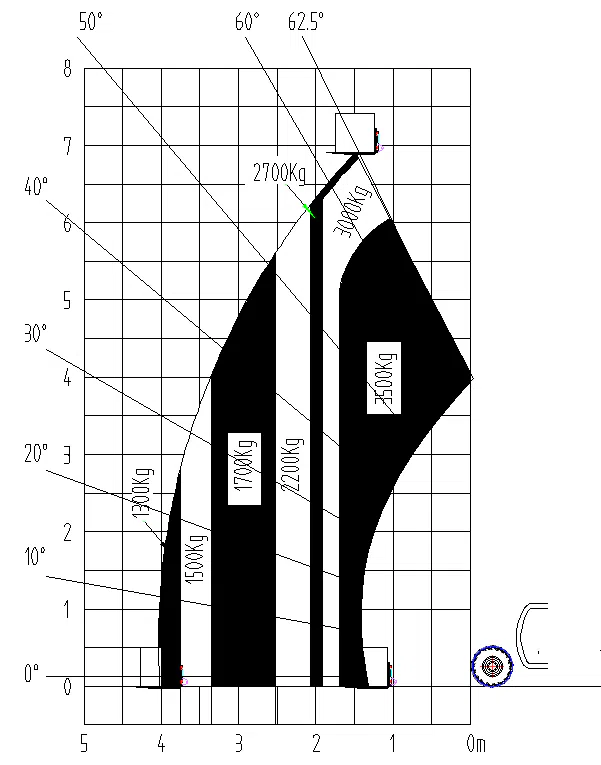
| Rated Load Capacity | Kg | 3200 |
| Maximum Lift Height | m | 6.95 |
| Maximum Reach Distance | m | 3.96 |
| Bucket Digging Force | Nm | 6800 |
| Maximum Traction Force | Nm | 6200 |
| Maximum Gradient Climbing Ability | % | 35 |
| Boom Angle | -3.5°~90° | |
| Chassis Adjustment Angle | ±10°(optional) | |
| Drive Form | Four-wheel drive | |
| Travel Mode | Crab steering, four-wheel steering, two-wheel steering | |
| Dimensions | ||
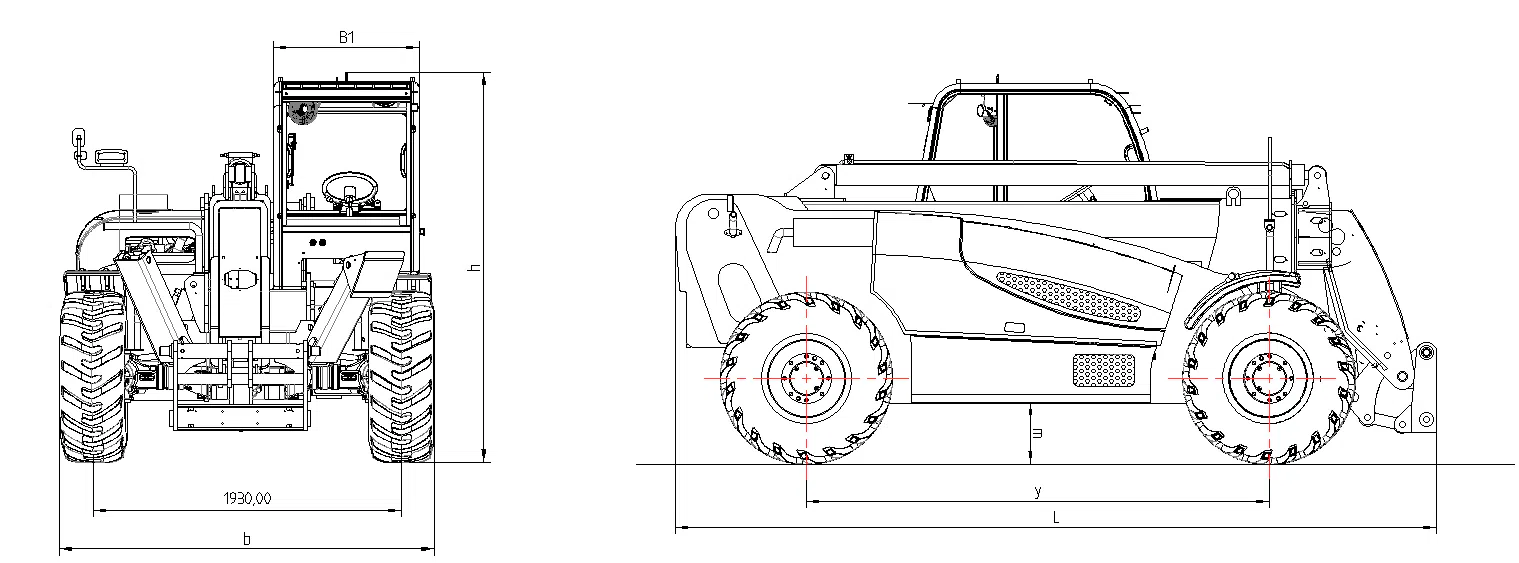
| l - Total Length (to Fork Frame) | m | 4.78 |
| b - Total Width | m | 2.3 |
| h - Total Height | m | 2.45 |
| y - Wheelbase | m | 2.9 |
| m - Ground Clearance | m | 0.38 |
| B1 - Cab Width | m | 0.91 |
| Turning Radius (outer wheel) | m | 4.5 |
| Track Width | m | 1.93 |
| Unladen Weight (with Forks) | Kg | 7940 |
| Standard Tires | 16/70-20 (tubeless) | |
| Standard Forks | 1220×120×45 | |
| Power Configuration | ||
| Engine Brand | Cummins | |
| Emission Standard | National2 | |
| Model | 4BTA3.9-C100-II | |
| Number of Cylinders - Displacement | L | 4-3.9 |
| Power / Rated Speed | 73.5kw/2200r | |
| Maximum Torque | 360Nm/(1300-1400)rpm | |
| Transmission System | ||
| Transmission Type | Hydraulic torque converter for travel | |
| Number of Gears (forward/reverse) | 4/4 (fully electronic shift) | |
| Maximum Travel Speed | Km/h | 30 |
| Parking Brake | Hand-controlled air brake parking brake | |
| Driving Brake | Air-over-hydraulic disc brake | |
| Braking Distance | m | ≤7 |
| Hydraulic System | ||
| Pump Type | Gear pump | |
| Valve Type | Hydraulic pilot valve | |
| Anti-explosion Valve Type | Double-acting balance valve | |
| Fork Leveling Mechanism | Hydraulic leveling | |
| Hydraulic Flow and Working Pressure | 150L/min 18MPa | |
| Steering Pressure | MPa | 16 |
| Tank Capacity | ||
| Engine Oil | L | 10 |
| Hydraulic Oil Tank | L | 200 |
| Fuel Tank | L | 120 |
| Working System | ||
| Maximum Lift Height | m | 6.95±5% |
| Rated Load Capacity | Kg | 3200 |
| Maximum Reach Distance | m | 3.96 |
| Effective Load at Maximum Reach | Kg | 1200±2% |
| Quick-change Frame Angle | -3°~90° | |
| Boom Angle Adjustment Time (empty, lifting) | s | ≤28 |
| Boom Angle Adjustment Time (empty, lowering) | s | ≤26 |
| Telescopic Boom Extension Time (empty) | s | ≤20 |
| Telescopic Boom Retraction Time (empty) | s | ≤18 |
| Fork Frame Tilt Forward Time (empty) | s | ≤18 |
| Fork Frame Tilt Backward Time (empty) | s | ≤20 |
3.2 Ton 7 m Telehandler Application Cases
Agricultural facilities and outdoor industrial yards often need flexible equipment to move bulky supplies, stack palletized goods, and handle materials across different work areas. The 3.2 Ton 7 m Telehandler combines a 3.2-ton rated lifting capacity with a 7-meter maximum lifting height, supporting a range of material-handling tasks in suitable farm and industrial environments.
On farms, the 3.2 Ton Telescopic Handler can be used for handling palletized feed, agricultural supplies, bagged materials, and other compatible loads. In industrial yards and outdoor storage areas, it can assist with stacking goods, transferring equipment components, and positioning materials at elevated locations. Optional attachments may provide additional versatility, subject to compatibility and the manufacturer's operating limits.
Its telescopic boom helps operators reach beyond the immediate front of the machine, while the compact design supports maneuvering around suitable storage and working areas. For outdoor operations on dirt roads, gravel, or compacted soil, the tire and drivetrain configuration should be matched to the terrain and expected loads.
For agricultural businesses, equipment distributors, and industrial operators, the 3.2 Ton 7 m Telehandler offers a flexible material-handling solution for multiple outdoor applications. Contact us to discuss suitable attachments, technical specifications, and configuration options for your project.
FAQ
1. How can I get an accurate quotation for my project?
To prepare a relevant quotation, provide your required lifting capacity, maximum lifting height, intended application, working terrain, preferred attachments, destination port or country, and purchase quantity. Our team can review your requirements and confirm the applicable machine configuration, pricing, and estimated delivery schedule.
2. Is the 3.2 Ton 7 m Telehandler available for wholesale or distributor orders?
Bulk purchasing and distributor cooperation can be discussed according to order volume, configuration, and commercial terms. Contact us with your expected quantity and target market to enquire about applicable pricing and cooperation options.
3. Can the machine be supplied under my own brand?
OEM and ODM cooperation options can be discussed for eligible orders. Depending on the agreed scope, buyers may enquire about branding and selected product configurations. Customization requirements, minimum order quantities, costs, and lead times should be confirmed before production.
4. What factors could delay delivery?
Delivery schedules may be affected by customized specifications, component availability, production arrangements, export documentation, shipping capacity, and destination-specific import procedures. Confirming your configuration and shipping requirements early can help reduce avoidable delays. Any estimated delivery date should be confirmed in the order documentation.
5. What happens if the delivered machine does not match the confirmed order?
Check the machine identification, configuration, accessories, and shipping condition against the order documents upon arrival. If you identify a discrepancy or transit damage, notify the relevant contact promptly and provide photographs, shipping records, and a description of the issue. The case can then be reviewed against the purchase agreement and applicable transport or warranty terms.
6. Are replacement parts and technical troubleshooting available after delivery?
Spare-parts supply and technical assistance can be discussed according to the model, required components, and service arrangement. When requesting support, provide the serial number, part number if available, operating hours, and fault symptoms. This information helps the technical team identify the relevant components and recommend appropriate next steps.
7. Can your team guide our operators after the telehandler arrives?
Available training and operating guidance should be confirmed before purchase. Depending on the agreed arrangement, support may cover basic operating procedures, pre-operation checks, safe load handling, and routine maintenance. Operators must be trained in accordance with the manufacturer's instructions and applicable local safety requirements.
8. How are warranty claims assessed and processed?
The typical process begins with a service request and supporting evidence, followed by an initial technical review. Additional diagnostic information may be requested before the team determines the likely cause and appropriate remedy. Any repair, replacement parts, labor, shipping costs, or on-site service will be handled according to the written warranty terms and applicable agreement.
9. Can you help us select a suitable configuration for difficult job-site conditions?
Yes, our team can review your application requirements before ordering. Share information about ground conditions, lifting height, load characteristics, working space, and required attachments. The recommended configuration must be verified against the manufacturer's specifications and load chart to ensure it is suitable for your intended operation.


